
 Image 1 of 1
Empower students while collecting really valuable data!
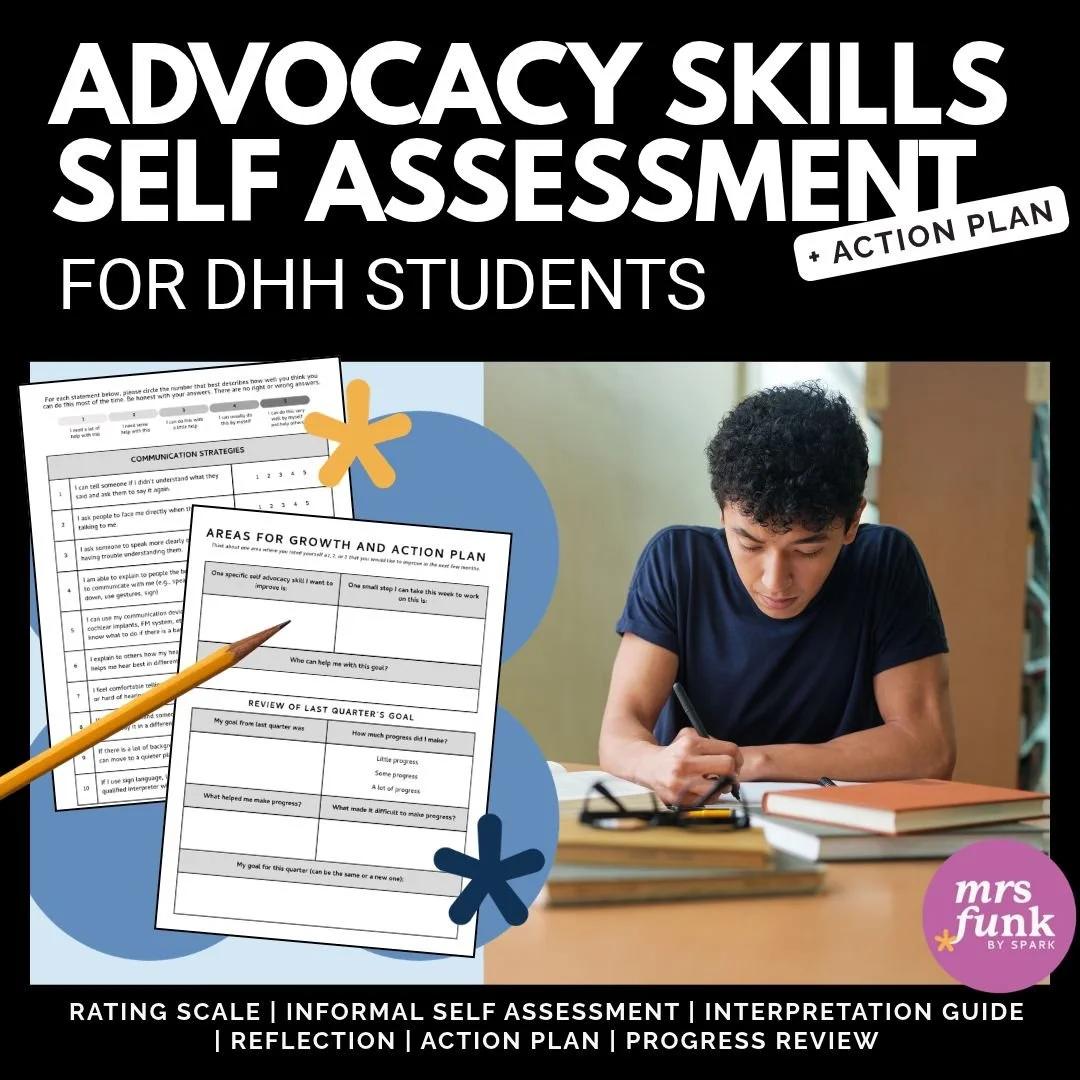
This comprehensive assessment & action plan is designed for quarterly use and allows students to reflect on and rate their abilities in key self-advocacy areas, including communication, classroom participation, social-emotional well-being, and technology use.
This resource includes:
Clear and accessible language for students.
A user-friendly rating scale (1-5).
Dedicated sections for students to identify their self-advocacy strengths and choose a specific area for growth with an action plan.
A progress review section for subsequent quarters to encourage reflection and goal monitoring.
An optional "Notes" section for additional student input.
A detailed "Information for Teachers" page providing guidance on interpreting student responses, calculating overall scores (optional), and most importantly, how to use this data for IEP development and progress monitoring.
By utilizing this resource, you can gain valuable insight into your students' perspectives on their self-advocacy skills, fostering a more student-centered approach to their education and empowerment.
Learning Objectives:
Upon completion of this self-assessment, students will be able to:
I can identify what I am already good at when it comes to speaking up for my hearing and communication needs.
I can think about specific times when I feel confident or not so confident when I need to advocate for myself.
I can think about how well I can do different things related to my self-advocacy skills in different areas of my life.
I can choose one thing I want to get better at when it comes to advocating for myself.
I can come up with a simple plan and one small step I can take to reach my goal.
I can keep track of how I'm doing and think about my progress in becoming a better self-advocate over time.
Teachers will be able to:
Gain insight into students' perspectives on their self-advocacy skills.
Identify individual student strengths and areas needing support in self-advocacy.
Collect data to inform the Present Levels of Performance (PLOP) section of IEPs.
Develop specific, measurable, achievable, relevant, and time-bound (SMART) self-advocacy goals for IEPs based on student input.
Monitor student progress in self-advocacy skills across quarters.
Facilitate student-led discussions about their learning needs and self-advocacy strategies.