
 Image 1 of 2
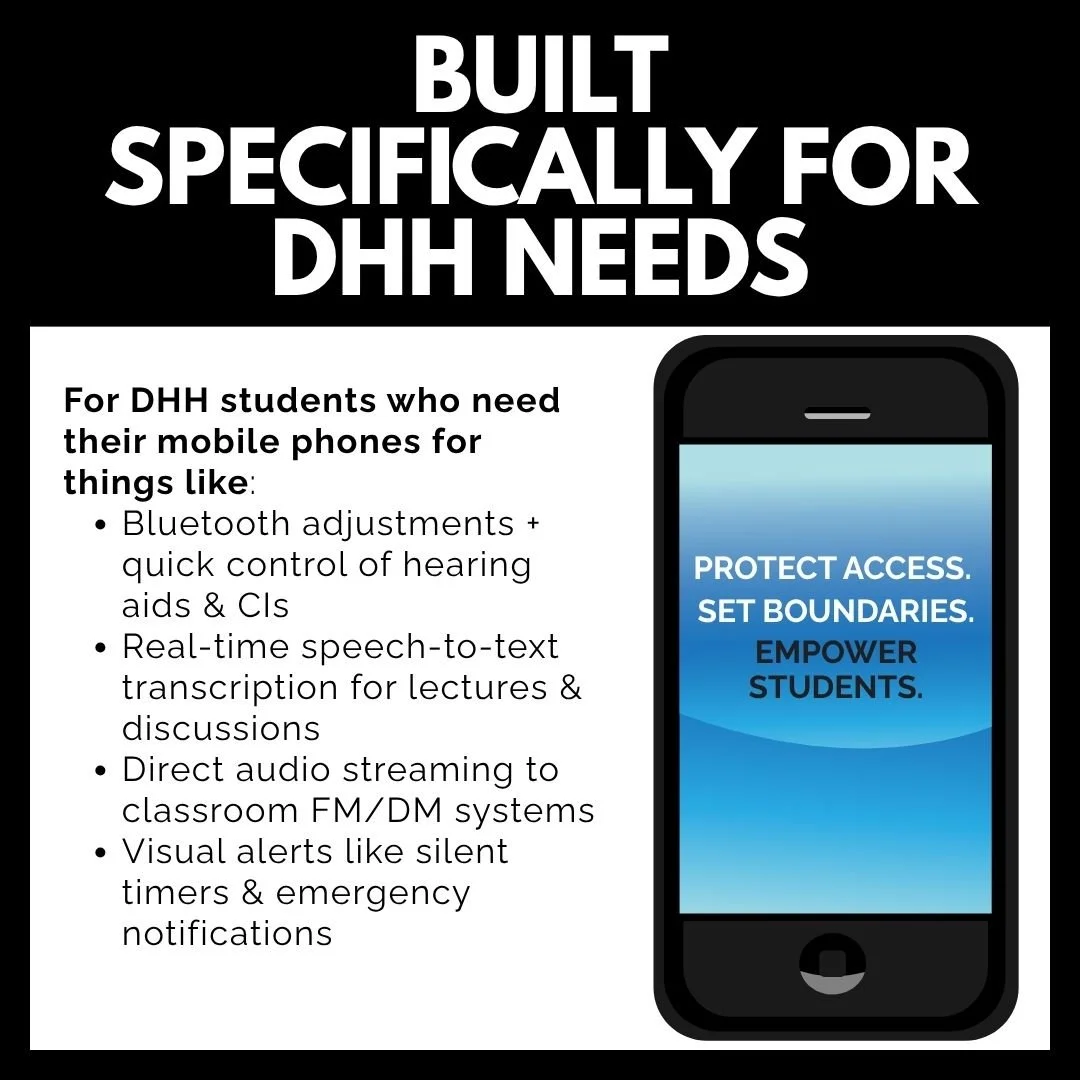 Image 2 of 2
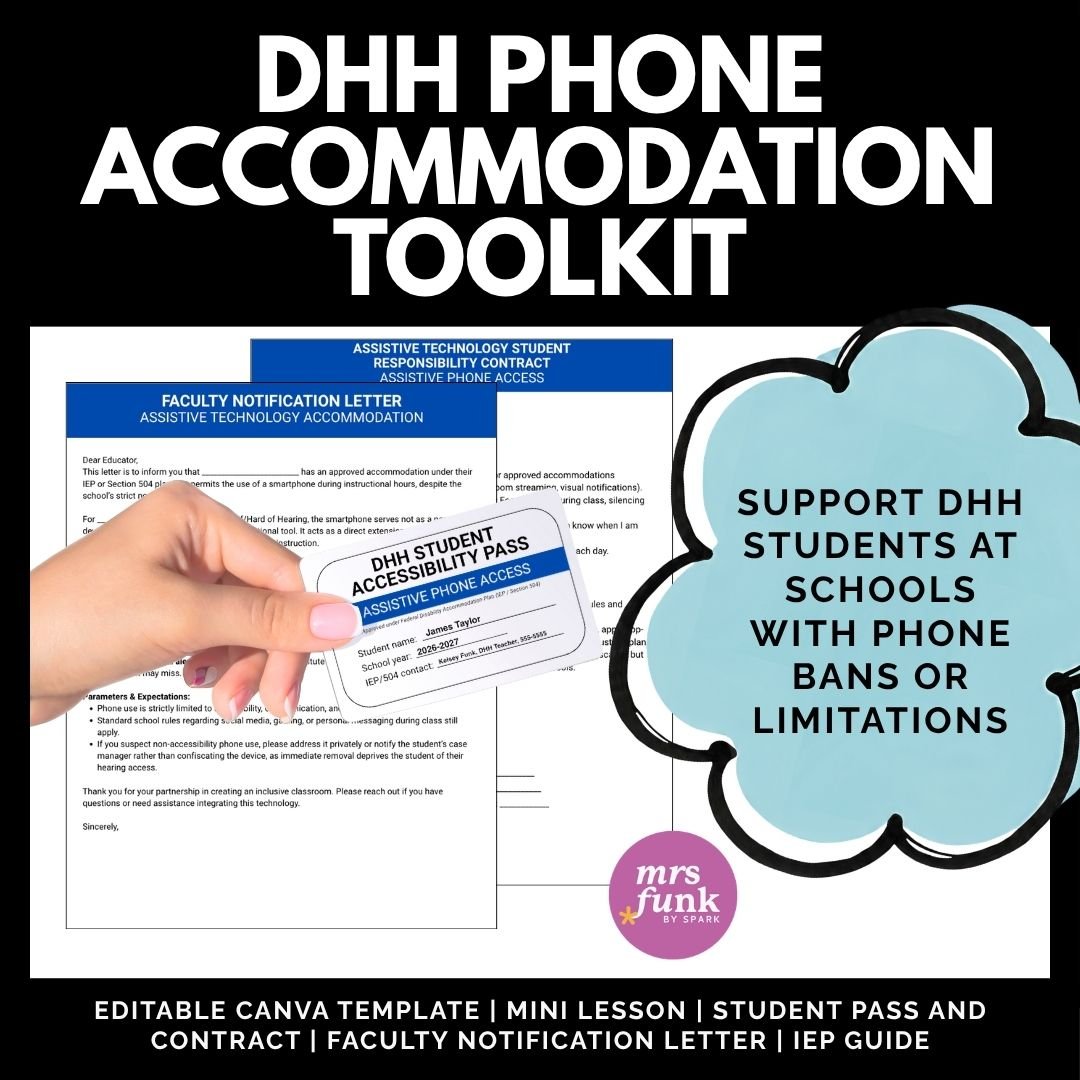
Bridge the gap between strict school phone bans and essential accessibility accommodations for Deaf and hard of hearing students with this plug-and-play toolkit. This resource equips students with self-advocacy skills while also providing IEP/504 guidance and clear documentation for staff. This resource is adaptable and great for protecting access while promoting student independence.
What's Included?
Mini-Lesson Plan (15–20 Mins): Teaches students to treat their smartphone as a required medical/accessibility tool, set up "Academic Focus" modes, and practice self-advocacy during substitute teacher role-play scenarios.
Printable Accessibility Pass: Quick-reference pass for students authorizing specific functions like live speech-to-text transcription, FM/DM system streaming, hearing aid/cochlear implant adjustments, and silent visual alerts.
Student Responsibility Contract: Establishes student accountability, clear screen-time commitments, and transparent consequences for off-task phone use.
Faculty Notification Letter: Pre-written letter for general education teachers explaining why the phone functions as a direct extension of hearing technology and outlining non-confiscation protocols.
IEP & 504 Documentation Guide: Clear phrasing suggestions for case managers, including exact language for non-confiscation clauses, functional wording, and self-advocacy goals.
Editable Canva Template: Access link to quickly customize bracketed text fields for individual student needs.
Approved Tech Usage Highlighted:
Bluetooth Adjustments: Quick control of Hearing Aids & Cochlear Implants.
Live Captioning: Real-time speech-to-text transcription for lectures & discussions.
Direct Audio Streaming: Seamless connection to classroom FM/DM systems.
Visual Alerts: Silent timers & emergency notifications.
Potential IEP Goal/Objective Alignment:
By [Date], given instructional activities, the student will independently launch and manage smart device accessibility applications (e.g., live captioning, direct audio streaming, or hearing device control software) during class in 4 out of 5 opportunities.
By [Date], the student will independently explain their AT accommodation to classroom teachers and staff by presenting their Accessibility Pass and stating: "I use my device as part of my hearing accommodation to adjust my hearing technology and access live captions," in 4 out of 5 classroom trials.
Given a role-play or real-world scenario where staff or substitute teachers query smart device usage, the student will remain calm, show their Accessibility Pass, and offer to have staff contact their case manager, achieving 100% compliance across 3 consecutive trials.
Important notes:
These materials do not constitute formal legal advice or binding district policy. Implementation of any assistive technology accommodation must be determined on an individualized basis by the student’s IEP or Section 504 team in compliance with federal laws (IDEA, Section 504, ADA) and local state regulations.
Cell phone and personal device policies vary widely across school districts. Educators should review, adapt, and seek appropriate administrative or special education department approval to ensure these documents align with local district guidelines.
Ensure the distribution of faculty letters and accommodation passes complies with student privacy laws. Information regarding a student’s disability status and accommodations should only be shared with educators and staff who have a direct, legitimate educational interest.
Bridge the gap between strict school phone bans and essential accessibility accommodations for Deaf and hard of hearing students with this plug-and-play toolkit. This resource equips students with self-advocacy skills while also providing IEP/504 guidance and clear documentation for staff. This resource is adaptable and great for protecting access while promoting student independence.
What's Included?
Mini-Lesson Plan (15–20 Mins): Teaches students to treat their smartphone as a required medical/accessibility tool, set up "Academic Focus" modes, and practice self-advocacy during substitute teacher role-play scenarios.
Printable Accessibility Pass: Quick-reference pass for students authorizing specific functions like live speech-to-text transcription, FM/DM system streaming, hearing aid/cochlear implant adjustments, and silent visual alerts.
Student Responsibility Contract: Establishes student accountability, clear screen-time commitments, and transparent consequences for off-task phone use.
Faculty Notification Letter: Pre-written letter for general education teachers explaining why the phone functions as a direct extension of hearing technology and outlining non-confiscation protocols.
IEP & 504 Documentation Guide: Clear phrasing suggestions for case managers, including exact language for non-confiscation clauses, functional wording, and self-advocacy goals.
Editable Canva Template: Access link to quickly customize bracketed text fields for individual student needs.
Approved Tech Usage Highlighted:
Bluetooth Adjustments: Quick control of Hearing Aids & Cochlear Implants.
Live Captioning: Real-time speech-to-text transcription for lectures & discussions.
Direct Audio Streaming: Seamless connection to classroom FM/DM systems.
Visual Alerts: Silent timers & emergency notifications.
Potential IEP Goal/Objective Alignment:
By [Date], given instructional activities, the student will independently launch and manage smart device accessibility applications (e.g., live captioning, direct audio streaming, or hearing device control software) during class in 4 out of 5 opportunities.
By [Date], the student will independently explain their AT accommodation to classroom teachers and staff by presenting their Accessibility Pass and stating: "I use my device as part of my hearing accommodation to adjust my hearing technology and access live captions," in 4 out of 5 classroom trials.
Given a role-play or real-world scenario where staff or substitute teachers query smart device usage, the student will remain calm, show their Accessibility Pass, and offer to have staff contact their case manager, achieving 100% compliance across 3 consecutive trials.
Important notes:
These materials do not constitute formal legal advice or binding district policy. Implementation of any assistive technology accommodation must be determined on an individualized basis by the student’s IEP or Section 504 team in compliance with federal laws (IDEA, Section 504, ADA) and local state regulations.
Cell phone and personal device policies vary widely across school districts. Educators should review, adapt, and seek appropriate administrative or special education department approval to ensure these documents align with local district guidelines.
Ensure the distribution of faculty letters and accommodation passes complies with student privacy laws. Information regarding a student’s disability status and accommodations should only be shared with educators and staff who have a direct, legitimate educational interest.