
 Image 1 of 1
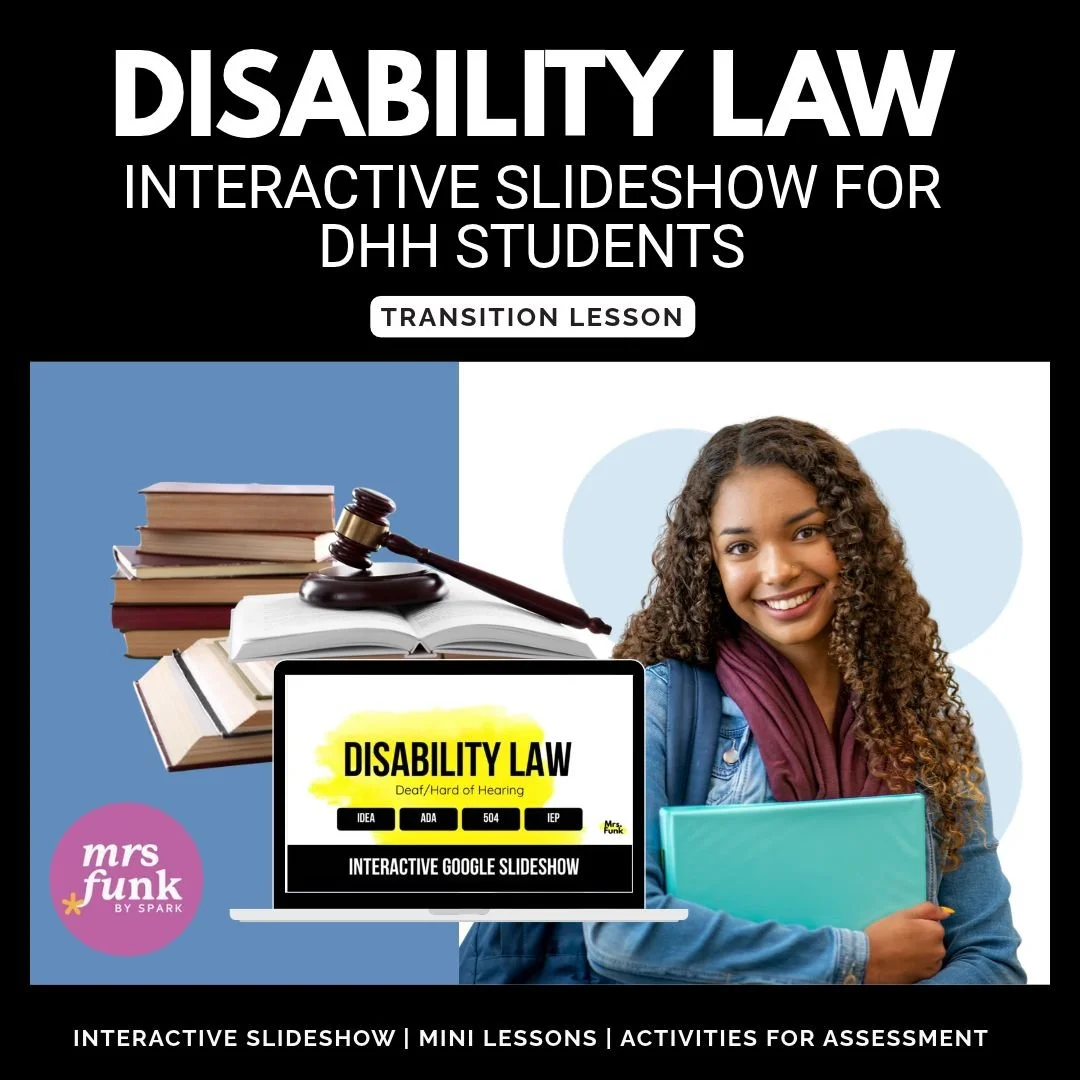
This interactive Google Slideshow self-advocacy lesson and activities on disability law and legal protections for people with hearing loss. Perfect for your transition-aged deaf/hard of hearing students working to better understand IDEA, ADA, 504, and their IEPs.
This Google Slideshow features text and info before true/false questions, a fill in the blank, and matching activity.
Suggested learning objectives:
Explain the main provisions for DHH individuals within the Individuals with Disabilities Education Act (IDEA), the Americans with Disabilities Act (ADA), and Section 504 of the Rehabilitation Act.
Identify the differences and similarities between IDEA, ADA, and Section 504.
Describe the rights and protections provided to students with hearing loss under IDEA.
Explain the process of developing and implementing an Individualized Education Program (IEP) for a student with hearing loss.
Understand the broader civil rights protections provided by the ADA and Section 504 for individuals with hearing loss.
Identify how these laws apply to different public and private settings, including education, employment, and public accommodations.
Describe the components of an IEP and its importance in providing tailored education to students with disabilities.
Explain how students can actively participate in their IEP meetings and decision-making processes.
Develop self-advocacy skills to effectively communicate needs and request accommodations.
Practice strategies for self-advocacy in various settings, including school, work, and community environments.
Learn how to identify when legal protections under IDEA, ADA, or Section 504 are needed.
Understand the steps to take if rights under these laws are being violated.
Reflect on personal experiences with self-advocacy and legal protections.
Engage in group discussions to share insights and learn from peers’ experiences and strategies.