
 Image 1 of 1
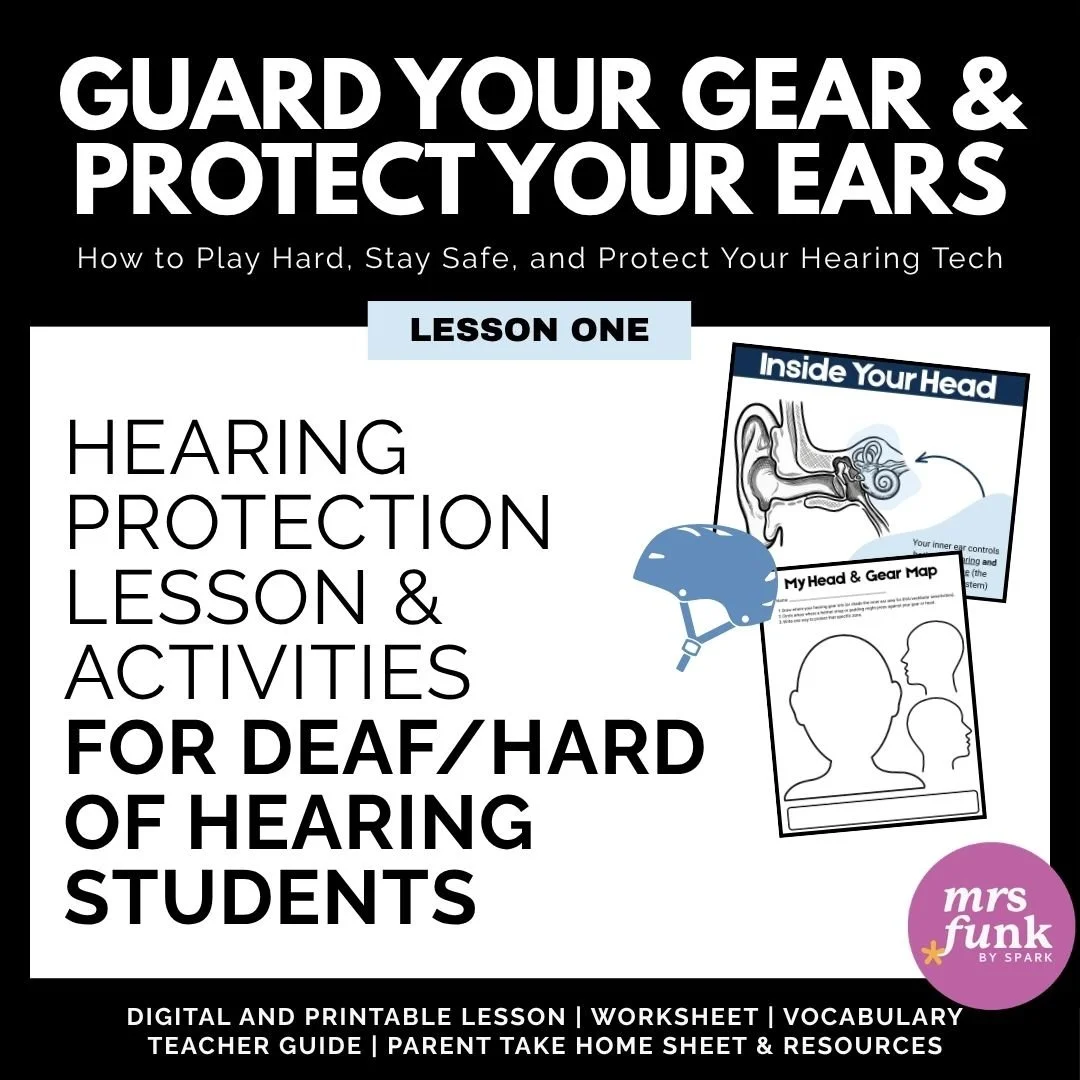
Empower your Deaf and Hard of Hearing (DHH) students to play hard, stay safe, and advocate for their hearing tech! This is a 60–75 minute interactive lesson designed for DHH students in late elementary through early high school.
Through student stories, vocabulary instruction, hands-on helmet fit checks, and visual mapping activities, this unit teaches students the anatomical and technical reasons why head protection is crucial and gives them the exact tools and scripts they need to advocate for themselves on the field, court, or playground.
Key learning objectives
I can explain at least two critical reasons why head and gear protection is necessary for individuals with hearing loss, inner ear conditions (like EVA), or hearing technology.
I can demonstrate a proper helmet fit while safely accommodating hearing aids, Cochlear Implants (CIs), or Bone-Anchored Systems (BAHAs).
I can evaluate physical activities by risk level and select appropriate safety modifications (e.g., swapping hard acrylic earmolds for soft silicone, choosing flag football over tackle).
I can formulate and deliver clear self-advocacy statements to explain equipment discomfort or safety needs to coaches, PE teachers, and peers.
What's included?
Step-by-step lesson plan procedure with suggested pacing
Engaging Google Slide deck (and PDF version of deck) containing student-centered stories and discussion prompts including student stories like:
Understanding EVA and inner ear balance.
Managing Cochlear Implants and BAHA posts without compromising safety.
Hard acrylic vs. soft silicone earmolds during sports.
Navigating peer sports and choosing safe alternatives.
Worksheet where students draw their device locations, identify helmet pressure zones, and note custom safety solutions.
Practice helmet fit check
Targeted vocabulary review
Assessment tasks to evaluate student understanding and advocacy readiness
Parent guide with resources on importance of safety, helmet fit, and resources for finding DHH-specific helmets and safety gear reviewed by other DHH parents.
Potential IEP Goal/Objective Alignment
Given a scenario involving equipment discomfort or safety risks related to hearing technology, Student will independently communicate their needs and propose a safe accommodation to a teacher, coach, or peer in 4 out of 5 observed opportunities.
Given physical sports headgear and personal hearing technology (CI, BAHA, or Hearing Aid), Student will independently perform the "2-2-2" fit check and identify necessary non-structural adjustments with 100% accuracy across 3 consecutive trials.
Given a list of physical activities and sports, Student will analyze each activity for technology/inner ear risk factors (e.g., impact to CIs/BAHAs, hard earmold hazards, EVA balance risks) and identify appropriate safety accommodations in 4 out of 5 trials.
Empower your Deaf and Hard of Hearing (DHH) students to play hard, stay safe, and advocate for their hearing tech! This is a 60–75 minute interactive lesson designed for DHH students in late elementary through early high school.
Through student stories, vocabulary instruction, hands-on helmet fit checks, and visual mapping activities, this unit teaches students the anatomical and technical reasons why head protection is crucial and gives them the exact tools and scripts they need to advocate for themselves on the field, court, or playground.
Key learning objectives
I can explain at least two critical reasons why head and gear protection is necessary for individuals with hearing loss, inner ear conditions (like EVA), or hearing technology.
I can demonstrate a proper helmet fit while safely accommodating hearing aids, Cochlear Implants (CIs), or Bone-Anchored Systems (BAHAs).
I can evaluate physical activities by risk level and select appropriate safety modifications (e.g., swapping hard acrylic earmolds for soft silicone, choosing flag football over tackle).
I can formulate and deliver clear self-advocacy statements to explain equipment discomfort or safety needs to coaches, PE teachers, and peers.
What's included?
Step-by-step lesson plan procedure with suggested pacing
Engaging Google Slide deck (and PDF version of deck) containing student-centered stories and discussion prompts including student stories like:
Understanding EVA and inner ear balance.
Managing Cochlear Implants and BAHA posts without compromising safety.
Hard acrylic vs. soft silicone earmolds during sports.
Navigating peer sports and choosing safe alternatives.
Worksheet where students draw their device locations, identify helmet pressure zones, and note custom safety solutions.
Practice helmet fit check
Targeted vocabulary review
Assessment tasks to evaluate student understanding and advocacy readiness
Parent guide with resources on importance of safety, helmet fit, and resources for finding DHH-specific helmets and safety gear reviewed by other DHH parents.
Potential IEP Goal/Objective Alignment
Given a scenario involving equipment discomfort or safety risks related to hearing technology, Student will independently communicate their needs and propose a safe accommodation to a teacher, coach, or peer in 4 out of 5 observed opportunities.
Given physical sports headgear and personal hearing technology (CI, BAHA, or Hearing Aid), Student will independently perform the "2-2-2" fit check and identify necessary non-structural adjustments with 100% accuracy across 3 consecutive trials.
Given a list of physical activities and sports, Student will analyze each activity for technology/inner ear risk factors (e.g., impact to CIs/BAHAs, hard earmold hazards, EVA balance risks) and identify appropriate safety accommodations in 4 out of 5 trials.