
 Image 1 of 1
Audience: Teachers of DHH and ASL teachers
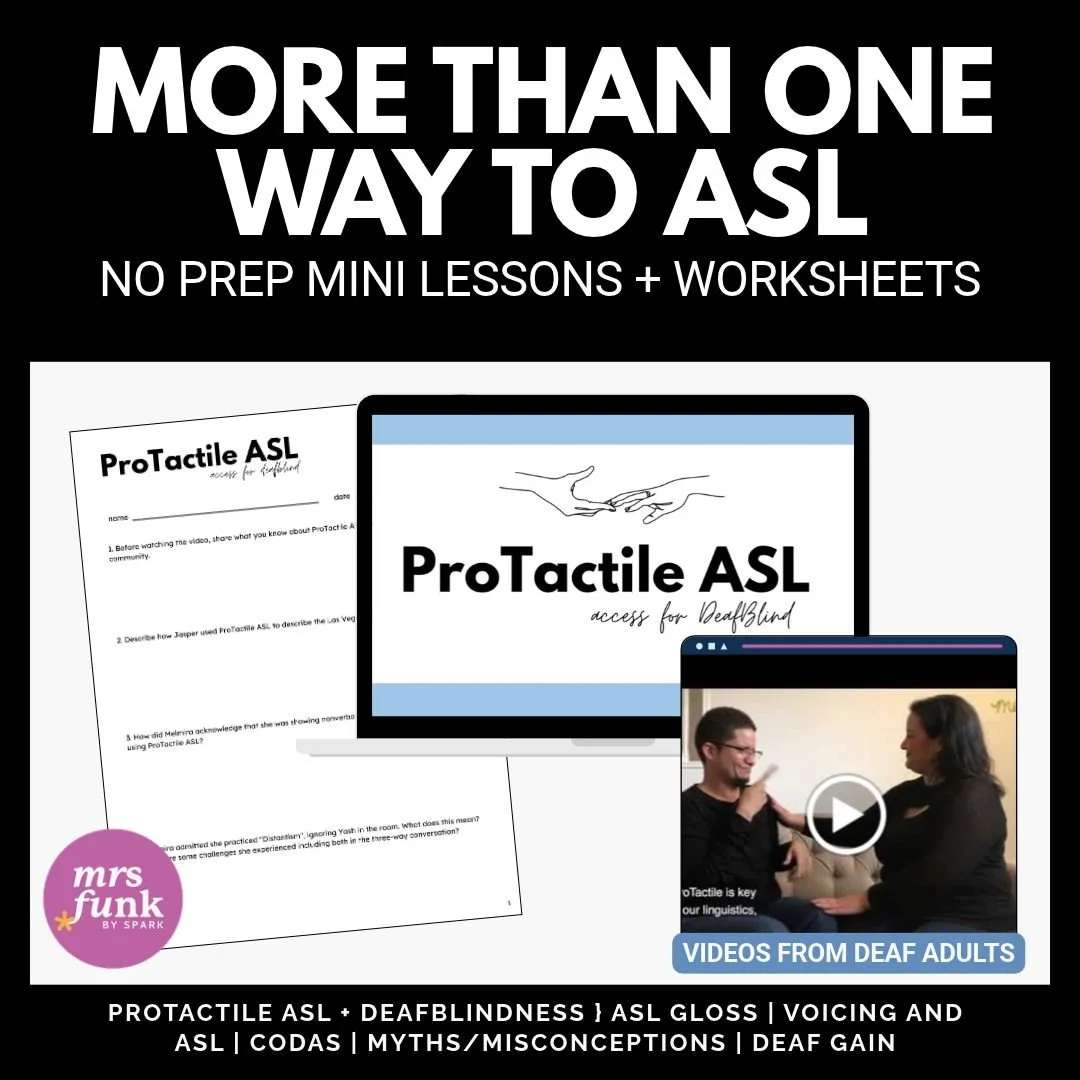
Want to help your students understand many different ways that D/deaf people communicate using ASL? This product includes:
Copy of a Google Slideshow for your Google Drive
6 activities with accompanying videos and printable worksheets
Suggested answer keys
Recommended objectives and learning outcomes:
I can describe Protactile ASL and how it helps the DeafBlind community
I can define "distantism"
I can consider differences in communication partners and the impact it has on personal connection and style
I can identify why a Deaf person may choose to use ASL without also voicing
I can describe the phonetic alphabet
I can list myths and conceptions about d/Deaf people
I can discuss why some deaf people believe deafness is not a disability
I can understand that deafness is a spectrum and identify different rich and valuable experiences for different people
I can define ASL gloss and when it might be used
I can share what a CODA is and challenges and benefits they may face
I can describe what Deaf Gain is to someone that doesn't know about Deaf culture or ASL
I can identify five forms of Deaf Gain.
I can describe different forms of sign language like SEE and PSE and explain how they are different.