
 Image 1 of 1
My DHH Journal: Guided Self-Advocacy, Identity & SEL Reflection Journal
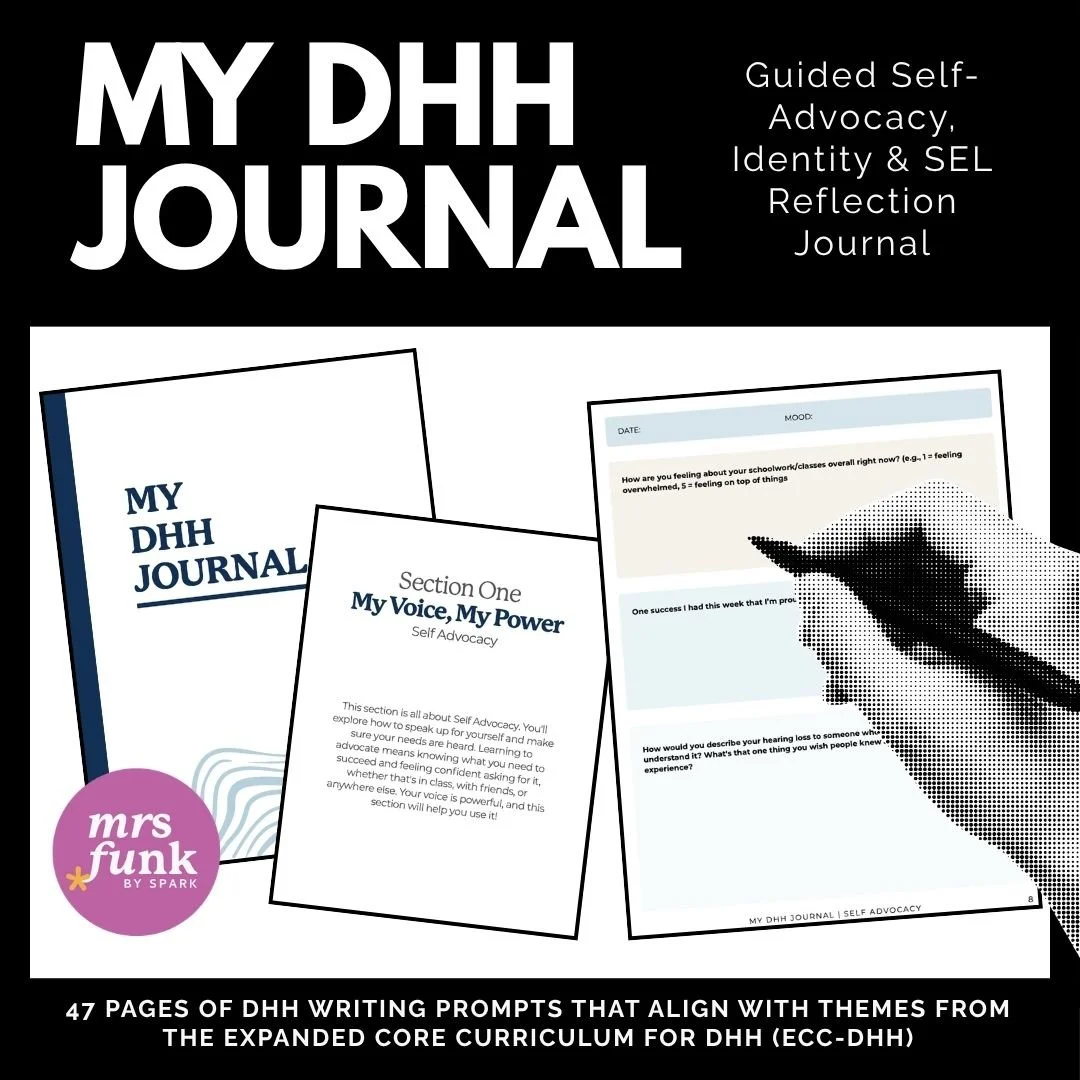
Give your Deaf and Hard of Hearing students a dedicated, safe space to build self-advocacy skills, process their identity, and develop emotional well-being through writing. This resource is a structured reflection journal designed specifically to guide DHH students through personal growth, communication strategies, and connection to the DHH community. This no-prep journal provides a routine resource for direct instruction, SEL check-ins, or IEP goal tracking.
What's included?
Every single page starts with quick-check items (Date, Mood, a 1–5 scale rating schoolwork stress, and a weekly victory prompt: "One success I had this week that I'm proud of myself for is...").
Rotating deep-dive questions focusing on real-life DHH experiences, assistive technology, classroom accommodations, and social-emotional skills.
Ample room for students to write freely, sketch, or elaborate on their thoughts.
6 Comprehensive Guided Themes
The 6 core themes directly map onto the specialized skill domains defined in the Expanded Core Curriculum for Deaf and Hard of Hearing Students (ECC-DHH). Includes 47 pages of journal prompts (with typically 3-4 guiding questions per page)
1. My Voice, My Power (Self-Advocacy)
Helps students learn to articulate their needs and build confidence in asking for support across settings:
Describing hearing loss to others and dispelling misunderstandings.
Leveraging technology (live captioning apps, video relay services, text-to-speech).
Creating classroom communication "pro moves" and teacher tips.
Scripting accommodations (asking for repetition, captions, or front-facing communication).
2. My Unique Story (Self-Identity)
Encourages students to celebrate what makes them unique and explore their DHH identity:
Connecting with other DHH peers and online communities.
Designing personal avatars or digital icons representing their identity.
Reframing stereotypes and identifying personal strengths derived from their perspective.
Celebrating passions and talents beyond hearing.
3. Dreaming Big (The Future & Goals)
Connects present self-advocacy to future success, education, and careers:
Envisioning long-term personal, career, and educational goals.
Leveraging DHH strengths (visual communication, ASL, problem-solving skills) in future jobs.
Brainstorming innovative accessibility tech and app ideas.
Building essential independence skills for adulthood.
4. My Inner World (Mental Health & Wellbeing)
Offers a safe outlet to process fatigue, frustration, and emotional wellness:
Expressing emotions tied to communication barriers and listening effort.
Identifying healthy coping mechanisms and positive self-talk.
Building personal resilience strategies and digital "calm corners".
Identifying go-to support networks during challenging days.
5. Our DHH World (Deaf Community & Culture)
Connects students to the broader history, culture, and vibrant community of DHH individuals:
Exploring Deaf culture, history, and American Sign Language (ASL).
Discovering DHH influencers, creators, and famous role models.
Sharing DHH culture and communication strategies with non-DHH peers.
6. Circle of Support (Family & Friends)
Strengthens relationships and builds bridges with loved ones:
Navigating communication dynamics with family and close friends.
Educating friends on how to be effective, inclusive communication partners.
Celebrating moments when friends and family go above and beyond.
How to use it in your sessions
Perfect 10–15 minute warm-up or lesson component during itinerant visits.
Easily aligns with objectives for student self-awareness, accommodation requests, and emotional regulation.
Relatable language that speaks directly to adolescents navigating secondary school environments.
Daily or weekly reflective writing prompts.
Give your Deaf and Hard of Hearing students a dedicated, safe space to build self-advocacy skills, process their identity, and develop emotional well-being through writing. This resource is a structured reflection journal designed specifically to guide DHH students through personal growth, communication strategies, and connection to the DHH community. This no-prep journal provides a routine resource for direct instruction, SEL check-ins, or IEP goal tracking.
What's included?
Every single page starts with quick-check items (Date, Mood, a 1–5 scale rating schoolwork stress, and a weekly victory prompt: "One success I had this week that I'm proud of myself for is...").
Rotating deep-dive questions focusing on real-life DHH experiences, assistive technology, classroom accommodations, and social-emotional skills.
Ample room for students to write freely, sketch, or elaborate on their thoughts.
6 Comprehensive Guided Themes
The 6 core themes directly map onto the specialized skill domains defined in the Expanded Core Curriculum for Deaf and Hard of Hearing Students (ECC-DHH). Includes 47 pages of journal prompts (with typically 3-4 guiding questions per page)
1. My Voice, My Power (Self-Advocacy)
Helps students learn to articulate their needs and build confidence in asking for support across settings:
Describing hearing loss to others and dispelling misunderstandings.
Leveraging technology (live captioning apps, video relay services, text-to-speech).
Creating classroom communication "pro moves" and teacher tips.
Scripting accommodations (asking for repetition, captions, or front-facing communication).
2. My Unique Story (Self-Identity)
Encourages students to celebrate what makes them unique and explore their DHH identity:
Connecting with other DHH peers and online communities.
Designing personal avatars or digital icons representing their identity.
Reframing stereotypes and identifying personal strengths derived from their perspective.
Celebrating passions and talents beyond hearing.
3. Dreaming Big (The Future & Goals)
Connects present self-advocacy to future success, education, and careers:
Envisioning long-term personal, career, and educational goals.
Leveraging DHH strengths (visual communication, ASL, problem-solving skills) in future jobs.
Brainstorming innovative accessibility tech and app ideas.
Building essential independence skills for adulthood.
4. My Inner World (Mental Health & Wellbeing)
Offers a safe outlet to process fatigue, frustration, and emotional wellness:
Expressing emotions tied to communication barriers and listening effort.
Identifying healthy coping mechanisms and positive self-talk.
Building personal resilience strategies and digital "calm corners".
Identifying go-to support networks during challenging days.
5. Our DHH World (Deaf Community & Culture)
Connects students to the broader history, culture, and vibrant community of DHH individuals:
Exploring Deaf culture, history, and American Sign Language (ASL).
Discovering DHH influencers, creators, and famous role models.
Sharing DHH culture and communication strategies with non-DHH peers.
6. Circle of Support (Family & Friends)
Strengthens relationships and builds bridges with loved ones:
Navigating communication dynamics with family and close friends.
Educating friends on how to be effective, inclusive communication partners.
Celebrating moments when friends and family go above and beyond.
How to use it in your sessions
Perfect 10–15 minute warm-up or lesson component during itinerant visits.
Easily aligns with objectives for student self-awareness, accommodation requests, and emotional regulation.
Relatable language that speaks directly to adolescents navigating secondary school environments.
Daily or weekly reflective writing prompts.