
 Image 1 of 3
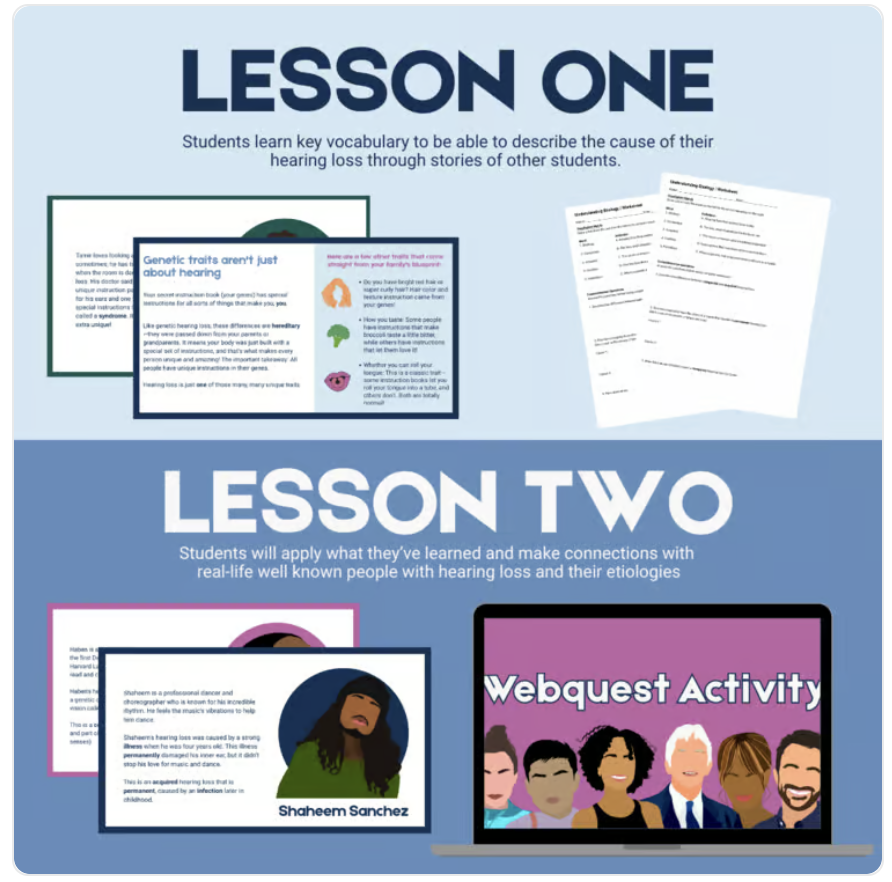 Image 2 of 3
 Image 3 of 3
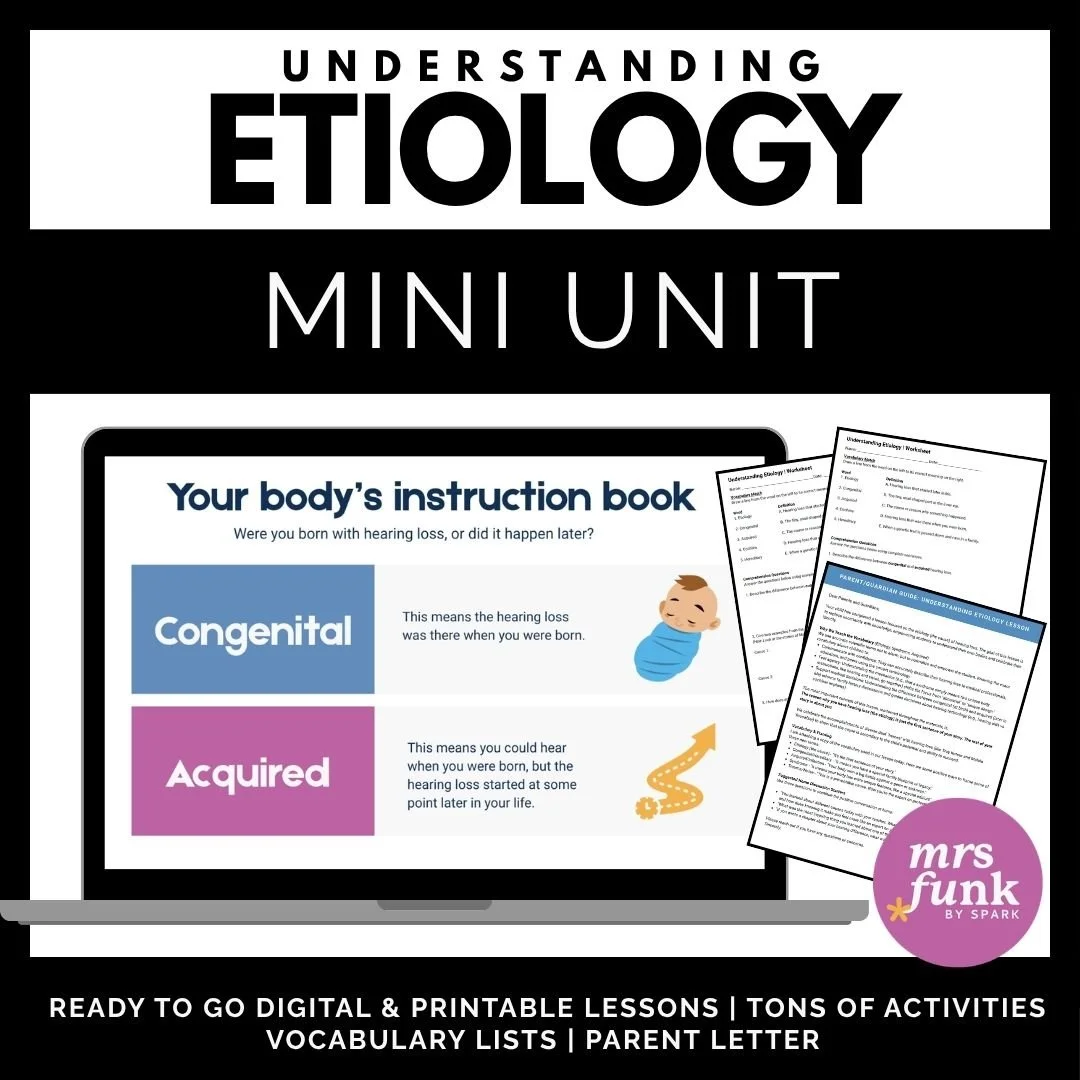
This two-part unit gives DHH students and their peers the language to confidently explain the etiology (cause) of hearing loss, shifting the focus from diagnosis to a positive self-identity. It's ready-to-teach and requires zero prep!
What's included in this unit:
Lesson 1: Story-Based Learning (The "Why" and "How")
An engaging reading about five different fictional heroes (Lily, Sam, Maya, Leo) who each have a unique cause. This material introduces and defines core vocabulary: Etiology, Congenital, Acquired, Genetic, Infection, and Trauma. This lesson includes both a printable and a digital slideshow version of the lesson, vocabulary sheet, worksheet, and answer key.
Lesson 2: Application and Research
Students apply vocabulary by exploring a famous heroes slideshow and completing an etiology webquest research activity. The slideshow includes examples of 5 different famous deaf/hard of hearing individuals and their etiologies and the webquest has six additional famous DHH people to explore through research and reflection.
Assessments & Resources: Includes thorough lesson plans, a post-assessment to measure vocabulary mastery, answer keys, and a simplified parent/guardian guide to approach this potentially sensitive topic tactfully and share discussion starts to continue the conversation at home.
***Important note: you must have a Google account to access the digital slideshow lessons for this activity. If you do not, a printable version is also included in the folder.
Potential Related Goals
Student will define the term etiology as "the cause of something" and state the cause of their own hearing loss (e.g., "genetic," "acquired from illness")
When asked about the reason for their hearing device (hearing aid/CI), Student will explain that their [type] loss, caused by [specific etiology], and describe how they require a device to process sound.
Alignment with MN Compensatory Skills Checklist
Knows personal hearing loss information
Knows the purpose of audiological evaluations and the audiogram.
Knows the cause of hearing loss (etiology).
Uses effective strategies to secure information (e.g., asking for clarification, repeating information).
Understands and defines hearing loss to others.
Uses appropriate vocabulary to discuss communication needs.
This two-part unit gives DHH students and their peers the language to confidently explain the etiology (cause) of hearing loss, shifting the focus from diagnosis to a positive self-identity. It's ready-to-teach and requires zero prep!
What's included in this unit:
Lesson 1: Story-Based Learning (The "Why" and "How")
An engaging reading about five different fictional heroes (Lily, Sam, Maya, Leo) who each have a unique cause. This material introduces and defines core vocabulary: Etiology, Congenital, Acquired, Genetic, Infection, and Trauma. This lesson includes both a printable and a digital slideshow version of the lesson, vocabulary sheet, worksheet, and answer key.
Lesson 2: Application and Research
Students apply vocabulary by exploring a famous heroes slideshow and completing an etiology webquest research activity. The slideshow includes examples of 5 different famous deaf/hard of hearing individuals and their etiologies and the webquest has six additional famous DHH people to explore through research and reflection.
Assessments & Resources: Includes thorough lesson plans, a post-assessment to measure vocabulary mastery, answer keys, and a simplified parent/guardian guide to approach this potentially sensitive topic tactfully and share discussion starts to continue the conversation at home.
***Important note: you must have a Google account to access the digital slideshow lessons for this activity. If you do not, a printable version is also included in the folder.
Potential Related Goals
Student will define the term etiology as "the cause of something" and state the cause of their own hearing loss (e.g., "genetic," "acquired from illness")
When asked about the reason for their hearing device (hearing aid/CI), Student will explain that their [type] loss, caused by [specific etiology], and describe how they require a device to process sound.
Alignment with MN Compensatory Skills Checklist
Knows personal hearing loss information
Knows the purpose of audiological evaluations and the audiogram.
Knows the cause of hearing loss (etiology).
Uses effective strategies to secure information (e.g., asking for clarification, repeating information).
Understands and defines hearing loss to others.
Uses appropriate vocabulary to discuss communication needs.